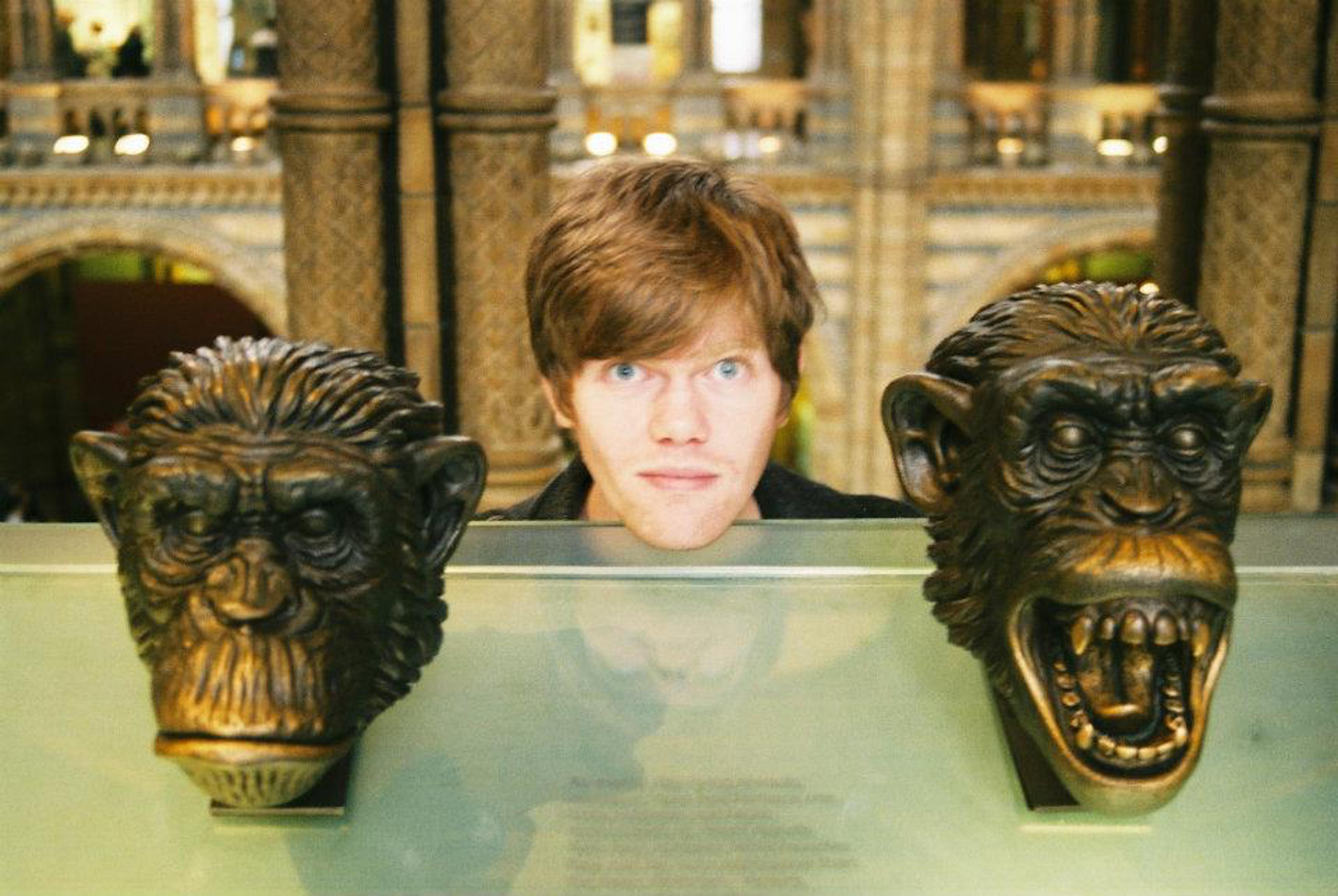
Hello, dobrý den, kia ora!
I am a senior lecturer/associate professor at Edge Hill University within the Department of Psychology, specialising in cognition, with a particular interest in research methods.
Previously, I have held the position of Research Scientist at the Faculty of Arts at Charles University/Univerzita Karlova, where I was the principal investigator of a PRIMUS grant called SocioLex and a GAČR (Grant Agency of Czech Republic) grant called cz-lex. You can read more about the projects here. I have also worked as a Post-doctoral Research Fellow at the NZILLB - University of Canterbury in New Zealand, researching the sociolinguistic factors of sound change. I was also a Post-doc in the Embodied Cognition Lab at Lancaster University, working on the Lancaster Sensorimotor Norms.
I completed my PhD in psychology at Lancaster University under the supervision of Prof Padraic Monaghan and Dr Peter Walker.
Research Interests
How do cognitive biases shape our language? My research focuses on the different ways that our language is shaped by the brain, with a specific focus on the way languages are learnt, processed and subsequently evolve. I combine experimental methods, corpus based analyses and computational approaches to address my research questions, along with quantitative data analysis. This approach is highly multidisciplinary, with the aim being to answer and generate questions that have implications for areas of psychology, linguistics and the cognitive sciences. My interests are constantly evolving through fruitful collaborations, with sociophonetics, sentence processing and semantics all being key areas of current interest.
Teaching Philosophy
At the core of my teaching is a rooted philosophy that brings together concepts, coordination and curiosity.
What do we learn? Much of what we learn in the world relies on understanding different, and often complex, concepts. By focusing on grounding learning in conceptual knowledge that grows and strengthens their understanding of theories, empirical work and real-world applications, they can gain deeper insights into the topic areas they are engaging with.
How is learning structured? Accessibility in educational settings has always been at the forefront of impactful pedagogy, so ensuring there is coordination between the instructor and the learner is crucial. This often means adapting to diverse settings and using novel or innovative methods to make sure that learning outcomes are reached, even when that may seem like a big challenge. For some, making a small step forward may be the biggest challenge, but connecting on a more personal level and jointly understanding barriers to learning can lead to the most observable gains.
What makes learning organic? As an academic, the main driver of much of my work is curiosity. Having a passion to learn myself is instilled within any teaching practices that I am involved with, as experiencing a learning environment that is vibrant and encouraging, will ensure that students can actually find new ways to think about what it is that gets them passionate. New ideas can grown when there is curiosity fuelling them.